

How to stop overthinking and break the cycle of constant worry

Key Takeaways
Worry Is Not the Same as Problem-Solving: Effective problem-solving moves toward a decision or action. Chronic worry can keep generating possibilities without producing a clear next step.
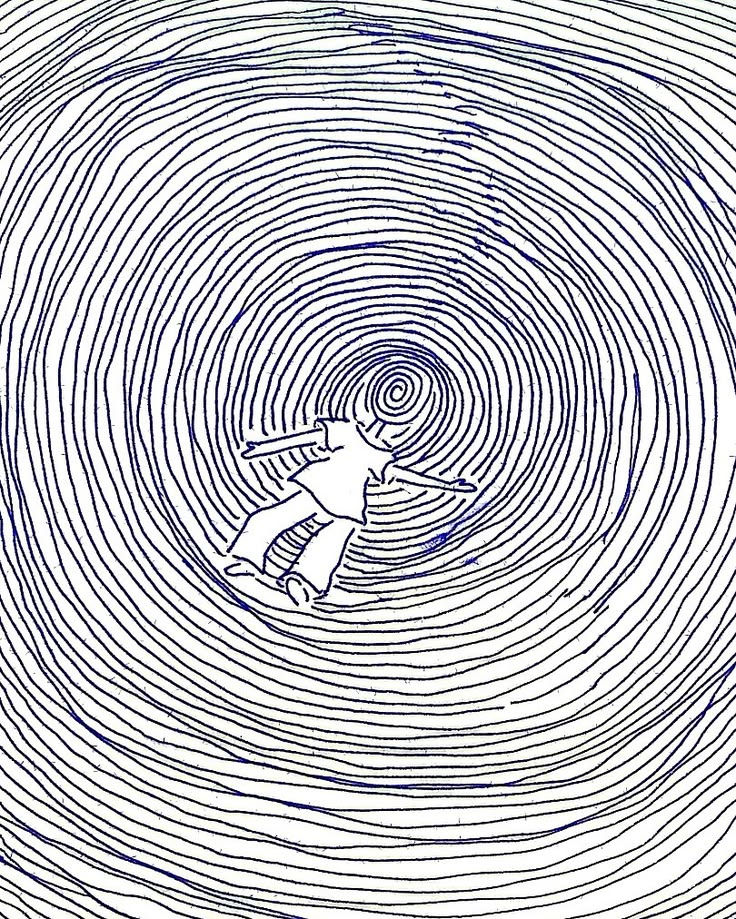
Process vs. Content: Repetitive Negative Thinking (RNT) describes the process of getting stuck in repetitive negative thoughts, while catastrophizing describes the content—magnifying a situation or anticipating an excessively negative outcome.
The Certainty Trap: Anxiety doesn't always seek practical solutions—it often seeks guarantees that life cannot provide. Catastrophizing can occur when possibility begins to feel like certainty.
Externalization Creates Distance: Writing, drawing, collage, clay, CBT reframing, and grounding can help move repetitive thoughts outside the mind, making them easier to observe and respond to.
Present-Moment Safety: You do not need to control or predict the future to respond effectively to this exact moment.
The Reality of Life
Planet Earth is a great teacher—one that continually gives us opportunities to evolve our patterns, deepen our understanding, and refine the way we live. To support our growth, life sometimes shakes the foundations we have built. These challenges can take many forms: pressure at work, a family member’s prolonged illness, mounting financial responsibilities, or major life milestones such as a child’s marriage.
How do we typically respond when faced with such challenges?
We worry
We often turn uncertainty into catastrophic scenarios, imagining everything that could go wrong. Before long, worry can rob us of sleep, keep us in a constant state of stress, and for some lead us to rely on medication simply to cope. When prolonged and intense, it can leave us feeling emotionally and physically depleted—even bringing life to a standstill.
What is the difference between problem-solving, repetitive negative thinking, and catastrophizing?
It is normal to problem-solve when faced with a worrying situation. Problem-solving is a purposeful, goal-directed process that involves identifying a problem, generating possible solutions, and taking action to resolve it.
However, many people get trapped in a constant loop of thought, or what is called repetitive negative thinking (RNT). This loop can be bidirectional, looking backward at past events (rumination) or forward into the future (worry). The person caught up in the loop is unable to disengage from or stop the flow of thoughts.
At its worst, sometimes worry can also lead to catastrophizing. This means magnifying the negative significance of an event or expecting an excessively negative outcome.
While catastrophizing invents the worst outcome, RNT acts as the engine that keeps that image playing on repeat. Together, RNT and catastrophizing maintain distress and keep attention focused on negative possibilities rather than achievable solutions.
Why Uncertainty Is So Difficult?
Why does the mind do this? The answer lies in what psychologists call intolerance of uncertainty.
Uncertainty is unavoidable. We cannot know with absolute certainty what will happen tomorrow or six months from now. For an anxious mind, however, not knowing feels dangerous. The mind attempts to reduce that discomfort by obsessively analysing possibilities.
This explains a crucial paradox: Sometimes the mind is not searching for an answer—it is searching for certainty. And certainty is rarely available.
No amount of mental calculation can establish with absolute certainty what someone else will decide, whether a venture will succeed, or how an illness will unfold. Yet the mind keeps calculating, making worry self-perpetuating.
Clearing the Gridlock of Worry: A Practical Guide
Managing worry isn't about forcing negative thoughts to disappear—it's about changing how you relate to them. To move from passive mental traffic to active navigation, you can draw from the following practical tools.
1. Make a Worry Record
Write down when the worry starts, what triggers it, what you would do if that situation happens, and how you respond to it. A worry record can be used to distinguish practical concerns from hypothetical worries. Monitoring can also identify maintaining strategies such as reassurance-seeking, avoidance, checking, and excessive preparation.
2. Art Therapy
Draw, make a collage, or work with clay. Instead of keeping the worry inside your head, give it a visual or physical form. You can draw the worry, create a collage using images, words, colours, or textures, or use clay to give the feeling a shape. It does not need to be beautiful or artistic—the purpose is to get the worry out of your head and onto something you can see and interact with. This can help create some distance from the thought and make it easier to notice what you are actually feeling or thinking.
Try asking yourself: If my worry had a shape, what would it look like? What colour would it be? If it were a character, what would I call it? With a collage, include images or words that represent the worry, and then add something that represents safety, strength, support, or what you can control. With clay, give the worry a physical form and notice its shape, weight, and texture. You can then change it—make it smaller, reshape it, or place it somewhere outside yourself.
Finish by asking: What is real? What am I assuming? What can I control? What is outside my control?
3. Reframe the Thought
Shift catastrophic predictions into balanced, realistic grounding:
Catastrophic thought: “If I lose my job, everything will fall apart.”
Balanced thought: “If I lose my job temporarily, I may need to conserve cash, reduce unnecessary expenses, and focus on finding another job. It would be difficult, but it would not mean that everything is over.”
Catastrophic thought: “If my health gets worse, I won’t be able to cope with it.”
Balanced thought: “A health problem could be difficult, but I can take it one step at a time, follow appropriate medical advice, and seek support if I need it. I do not have to solve every possible future problem today.”
4. Do Neurographic Line Work
Neurographica transforms abstract, overwhelming worry into tangible lines on paper, where its hold over the mind begins to weaken.
By rounding off every sharp intersection where your anxious thoughts cross, you give your nervous system a visual cue that tension is resolving. This repetitive, focused drawing interrupts chronic worry loops, shifting your brain out of fight-or-flight and into present-moment calm.
5. Set a Scheduled Worry Period
Contain concerns to a dedicated 15-minute daily window. If a worry arises out side that window, note it down and return your attention to the present.
6. Reduce Reassurance-Seeking
Resist the urge to ask others for reassurance or search online for answers. Delay checking by 15 minutes to observe how anxiety naturally rises, peaks, and falls on its own.
7. Adopt an Uncertainty Mantra
Repeat to yourself:
“I do not know what will happen, and I can function without knowing everything today.”
8. Interrupt Loops Somatically
Change your physical environment, stretch, drink some water, take a walk in the park, or practise slow diaphragmatic breathing to lower physiological arousal and anchor yourself back in the present moment.
Closing Reflection
Life will continue to bring challenges. We cannot control every event, predict every outcome, or eliminate uncertainty. The good news is that worry does not have to control our response to life’s challenges. With awareness and practice, we can learn to step out of this cycle, respond more consciously, and gradually move toward greater inner peace.
The next time worry begins to take over, pause and ask yourself:
Am I solving a problem, or am I simply thinking about the problem again and again?
Not every thought requires an answer. Not every possibility requires preparation. And not everything that could happen needs to be dealt with today. Sometimes, the wisest response is to acknowledge what is uncertain, focus on what is within our control, and return to the present moment.
The goal is not to stop thinking. It is to stop getting stuck.
Disclaimer
This article is intended for educational purposes only and is not a substitute for professional mental health care. If worry is persistent, significantly affects your sleep or daily functioning, or feels overwhelming, please consider consulting a qualified mental health professional.
FAQ
What is the fundamental difference between problem-solving and worry?
Problem-solving is a goal-directed process that moves toward a concrete action or decision. Worry, by contrast, is a repetitive loop that generates endless possibilities without producing a clear next step.
How do Repetitive Negative Thinking (RNT) and catastrophizing work together?
RNT is the repetitive process that keeps negative thoughts active, while catastrophizing amplifies the perceived threat. Catastrophizing can make a situation seem more serious than it is or lead a person to anticipate the worst possible outcome, while RNT keeps the person focused on that possibility by repeatedly analysing, replaying, or anticipating negative consequences.
Together, they can create a cycle in which catastrophic thoughts trigger repetitive thinking, and repetitive thinking keeps those thoughts vivid and emotionally distressing, making it harder to disengage and shift attention toward practical solutions.
Why does the anxious mind struggle so much with uncertainty?
An anxious mind views not knowing as dangerous. It engages in chronic worry not to find practical solutions, but to chase absolute certainty and guarantees that life cannot provide.
How does art therapy help in worry mangement?
Art therapy may help manage worry by shifting attention away from repetitive thinking and toward a concrete, creative activity. Drawing, painting, or working with clay can provide a structured way to engage with emotions while supporting relaxation and aspects of emotion and cognitive regulation. Research suggests that these effects may help reduce anxiety and make it easier to step back from distressing thoughts rather than remain caught in repetitive worry.

Author Bio
Monica Kapur is an Art Therapist based in Delhi and working globally online. She specializes in helping individuals overcome anxiety, stress, trauma, and emotional blocks through Art Therapy, somatic practices, and neurographica. Passionate about mental health, she writes to inspire readers to pause, reflect, and reshape their lives with greater clarity and compassion.


Comments